

A workout should last about 45 to 75 minutes for most strength training goals, including a 5 to 10 minute warm up. That allows 12 to 20 hard sets with proper rest between them. A 30 minute workout is enough for general fitness, while sessions longer than 90 minutes usually mean too much rest time or too much volume in one day.
The right length depends on your goal: 30 to 45 minutes for general health, 45 to 75 minutes for muscle growth, and 60 to 90 minutes for maximal strength, because heavy sets need longer rest. Working out twice a day can help when you separate strength and cardio by at least six hours and avoid training the same muscle hard twice in one day. Coaches at Fitness Factory KC in Overland Park plan sessions around set counts and rest times, not the clock.
How Long Should a Workout Be by Goal?
| Goal | Typical session length | Why |
|---|---|---|
| General health | 30 to 45 minutes | Two to three full body sessions meet strength guidelines |
| Muscle growth | 45 to 75 minutes | Needs moderate to high volume with 1 to 3 minute rests |
| Maximal strength | 60 to 90 minutes | Heavy sets need longer rest periods of 3 to 5 minutes |
| Fat loss | 40 to 60 minutes | Strength work to keep muscle, plus optional cardio |
| Time efficient training | 25 to 40 minutes | Supersets and fewer exercises per session |
What the Research Says About Volume and Time
Volume, the number of hard sets you perform, is one of the main drivers of muscle growth, and it is also the main driver of how long you spend in the gym. In an eight week study of trained men performing seven exercises three times per week, groups doing one, three or five sets per exercise all improved strength similarly, but the five set group gained the most muscle (Schoenfeld et al., 2019).
The practical lesson: if strength is your main goal, shorter sessions with fewer sets can work well. If maximum muscle growth is the goal, you need more total sets, which means either longer sessions or more training days. Spreading that volume across more days often keeps each session shorter and sharper.
How to Calculate Your Ideal Workout Length
Use this simple formula:
Session time = warm up + (number of sets × (set duration + rest time)) + transitions
| Example session | Calculation | Total |
|---|---|---|
| 15 sets, 2 min rest | 8 min warm up + 15 × (45 s + 120 s) + 6 min transitions | About 55 minutes |
| 12 sets, 90 s rest | 6 min warm up + 12 × (45 s + 90 s) + 5 min transitions | About 38 minutes |
| 20 sets, 3 min rest | 10 min warm up + 20 × (45 s + 180 s) + 8 min transitions | About 93 minutes |
Rest time has the biggest impact. Read our guide on how long to rest between sets to choose the right rest for each exercise.
Is a Longer Workout Better?
Not past a point. You may have heard that workouts over an hour raise cortisol and destroy muscle. That claim is overstated: short term hormone changes during exercise do not reliably predict muscle growth. The real issue with very long sessions is fatigue. Set quality drops, form breaks down and later exercises become less effective.
Signs your workouts are too long:
- Your last two exercises are consistently weaker than they should be
- You spend more time resting or on your phone than training
- You dread sessions or skip them because they take too long
- Recovery between sessions is getting worse
How to Shorten a Workout Without Losing Results
- Use antagonist supersets. Pair a push with a pull, such as a bench press and a row, and rest after each pair.
- Cut junk sets. Every set should end close to failure. Easy sets add time without adding results.
- Warm up specifically. Two or three light sets of your first lift beat 15 minutes of general cardio.
- Train more often. Four 45 minute sessions can deliver the same weekly volume as three 60 minute sessions.
- Plan your equipment. Choose exercises in the same area of the gym to cut walking and waiting.
Our guide to 8 science backed ways to maximize workout results covers how to make every set count.
Is Working Out Twice a Day a Good Idea?
Working out twice a day can work well, but only for specific situations. It is most useful when:
- You split strength and cardio. Lifting in the morning and doing cardio in the evening reduces interference between the two.
- You need high weekly volume but cannot fit long sessions into your day.
- You are preparing for a competition under a coach’s guidance.
- Your schedule only allows short windows, such as 30 minutes before work and 30 minutes after.
Rules for training twice a day:
- Separate sessions by at least six hours where possible.
- Avoid training the same muscle hard twice in one day.
- Eat a meal with protein and carbohydrates between sessions.
- Protect your sleep. Two sessions a day demand more recovery, not less.
- Track fatigue. If performance drops across a week, return to once daily training.
For most people, once a day for three to five days a week is enough. Our guide on how often you should work out helps you choose your weekly frequency, and our article on how to optimize exercise recovery explains how to recover between sessions.
Consistency Beats Session Length
The best workout length is the one you can repeat every week. A 40 minute session you complete four times a week will beat a 90 minute session you skip half the time. Read how to create a sustainable workout routine for ways to make training a fixed part of your week.
Train on Your Schedule at Fitness Factory KC
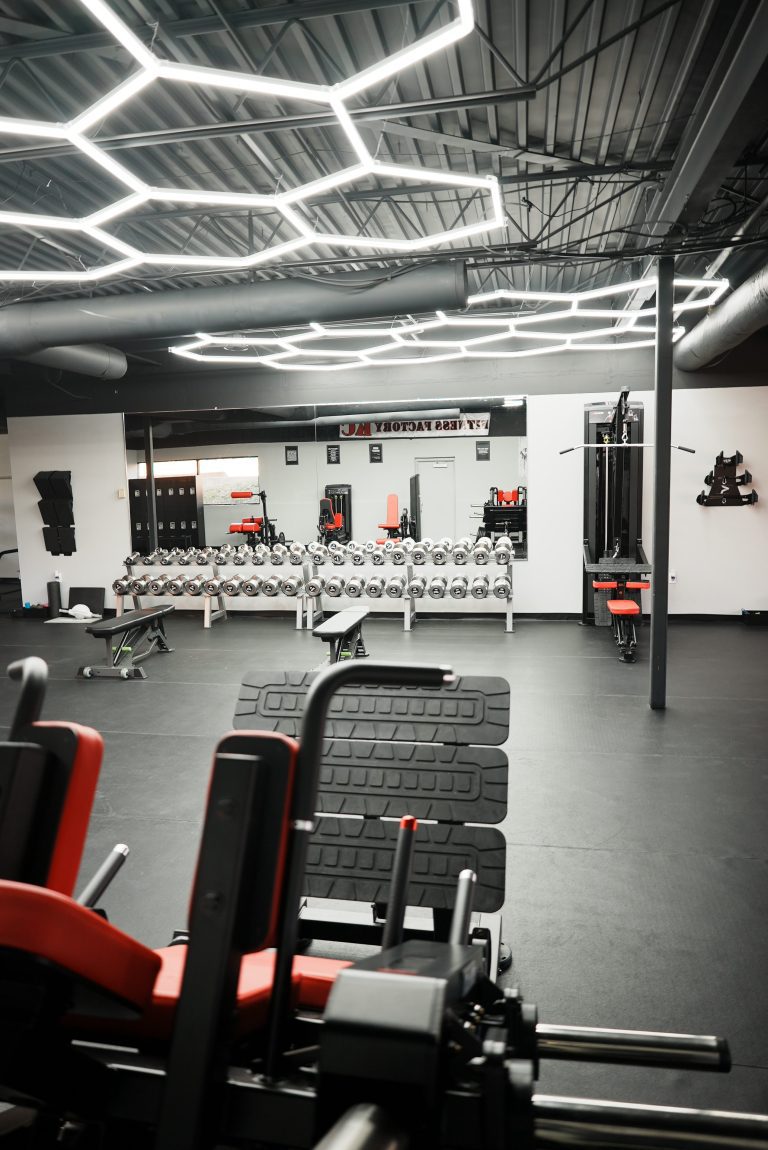
At Fitness Factory KC in Overland Park, members on our 24/7 memberships can train whenever their schedule allows, including early mornings and late nights, which makes short or twice daily sessions easy to fit in. Membership is capped, so you spend your session training rather than waiting for equipment.
Owner and head coach Shavane Morrison is NASM and NCSF certified and a J3 University bodybuilding coach with more than seven years of experience designing efficient programs. Book a session with our personal training team to get a plan that fits your time.
Workout Length FAQs
Is a 30 minute workout enough?
Yes, especially for general fitness or when time is limited. Use compound exercises and supersets to fit 9 to 12 hard sets into 30 minutes.
Is a 2 hour workout too long?
For most people, yes. Splitting that volume across more days usually improves performance and recovery.
Does a warm up count toward workout time?
Yes. Plan 5 to 10 minutes for a warm up within your total session length.
How long should a cardio workout be?
Moderate cardio sessions of 20 to 45 minutes work well for most people. Adults need about 150 minutes of moderate activity per week in total.