The best exercises to build your abs do far more than carve out a six-pack. They train the muscles that stabilize your spine, transfer force between your upper and lower body, and keep you strong through every lift, sprint, and daily task. A well-built core is the foundation of athletic performance, balance, and injury prevention. This guide covers four proven ab exercises, the biomechanics behind each one, and how to program them for real strength and visible definition.
Strong abs are built on the same principles as any other muscle. They need tension, progressive overload, and consistency. Endless random crunches will not get you there. Each movement below loads the abdominal wall from a specific angle, from the stubborn lower region to the upper rectus abdominis. Train with control, add resistance over time, and back the work with sound nutrition. That is how effort turns into a defined, functional core.
Understanding Your Core Muscles
Before you train the abs, it helps to know what you are training. The abdominal wall is not one muscle. It is a group of muscles that work together to flex, rotate, and stabilize your trunk.
| Muscle | Location | Primary Function |
|---|---|---|
| Rectus abdominis | Runs vertically from the ribs and sternum to the pubic bone | Spinal flexion. This is the visible “six-pack” muscle |
| Transverse abdominis | The deepest layer, wrapping around the torso like a belt | Stabilizes the spine and pelvis and controls intra-abdominal pressure |
| External obliques | Along the sides of the waist, running on a diagonal | Trunk rotation and side bending |
| Internal obliques | Beneath the external obliques | Rotation and lateral flexion, working with the transverse abdominis for stability |
To build a strong, visible midsection, you need to challenge each of these areas. A quality ab workout hits them from several angles, which is exactly what the exercises below are built to do.
A Note on the “Lower Abs”
The lower abs are not a separate muscle. They are the lower fibers of the rectus abdominis. You cannot isolate them, but you can emphasize them. Bottom-up movements that raise the legs toward the torso load that lower region harder, because the weight of your legs supplies the resistance. This is why leg-raising exercises tend to feel more difficult than a standard crunch, and why they belong in any program aimed at balanced core development.
Abs Respond to Overload
The rectus abdominis grows the same way your chest or back does. Visible definition takes muscle, and muscle takes progressive overload. Unless your genetics are unusually generous, a stronger, thicker rectus abdominis requires added resistance and gradual progression over time. Bodyweight work builds a base. Loaded work builds the muscle that shows.
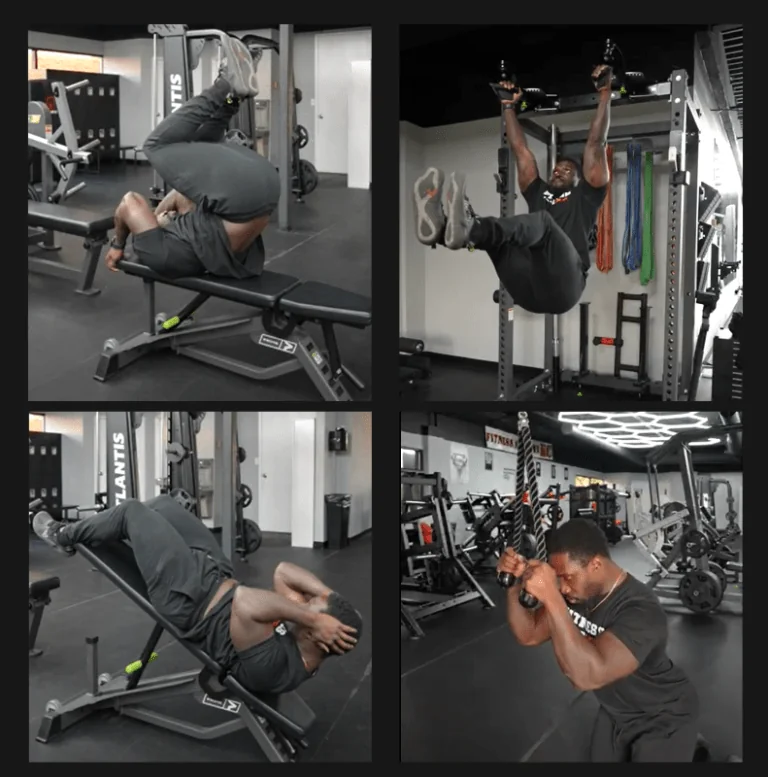
1. Garhammer Raise
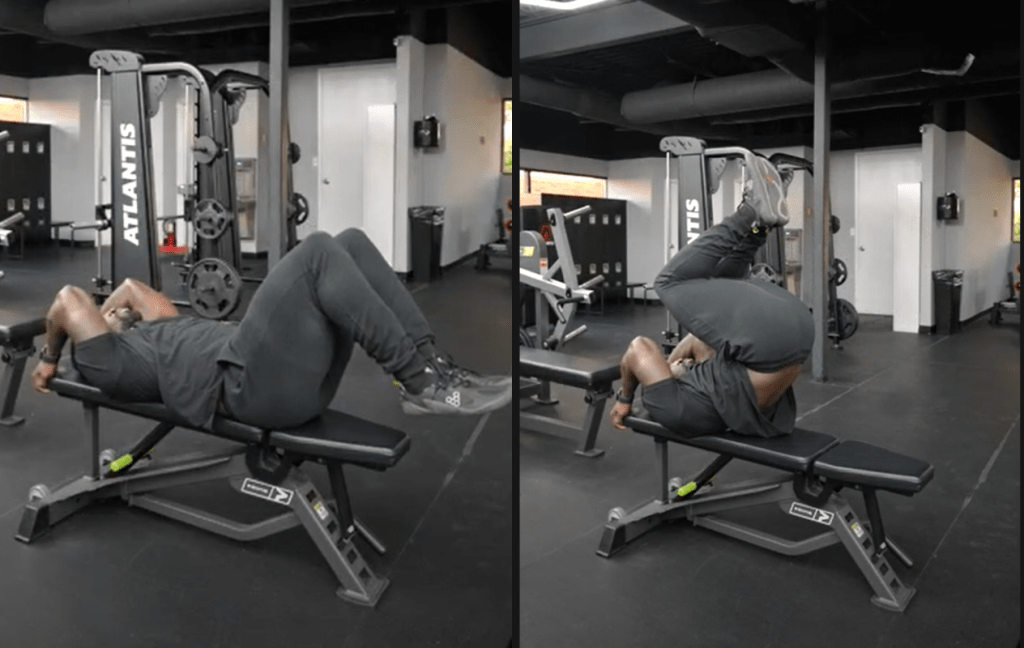
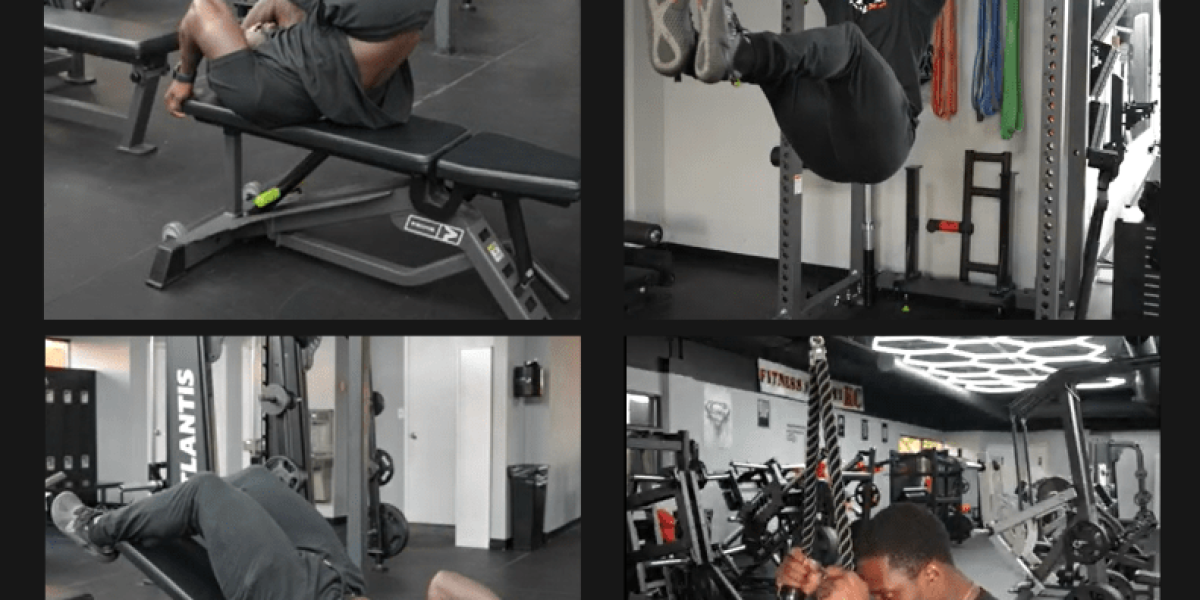
The Garhammer raise is a lesser-known movement that trains the lower abs with brutal efficiency. Invented by sports scientist John Garhammer, PhD, it keeps tension on the rectus abdominis for the entire set. That single feature is what makes it so effective.
Here is why it works. In a standard hanging knee raise, your legs return to a full hang between reps, which gives the abs a brief rest. The Garhammer raise removes that rest. Your knees start at hip height and never drop below it, so the lower abs stay under constant load from the first rep to the last. Less rest means more time under tension, and more time under tension builds strength and definition.
Muscles worked: Lower rectus abdominis, hip flexors, and the deep core stabilizers.
How to Perform the Garhammer Raise
- Hang from a pull-up bar with an overhand grip, or set your forearms on the pads of a captain’s chair. Engage your lats and pull your shoulders down and slightly back.
- Raise your knees until your thighs are parallel to the floor, with roughly 90-degree angles at your hips and knees. This is your starting position.
- Drive your knees up toward your chest as high as you can, rounding your lower back slightly at the top to fully contract the abs.
- Lower your knees under control back to the parallel starting position. Do not let them drop below hip height. Pause, then repeat.
Tips for success:
- Keep the reps slow. Momentum steals the work from your abs and hands it to your hip flexors.
- Start where you are. If a full set burns out fast, drop to a bench version and lie on your back to build strength first.
- Add load once your form is solid. A dumbbell held between your feet or a medicine ball between your knees increases the challenge.
- Use wrist straps if grip fatigue ends your set before your abs do.
2. Decline Crunch
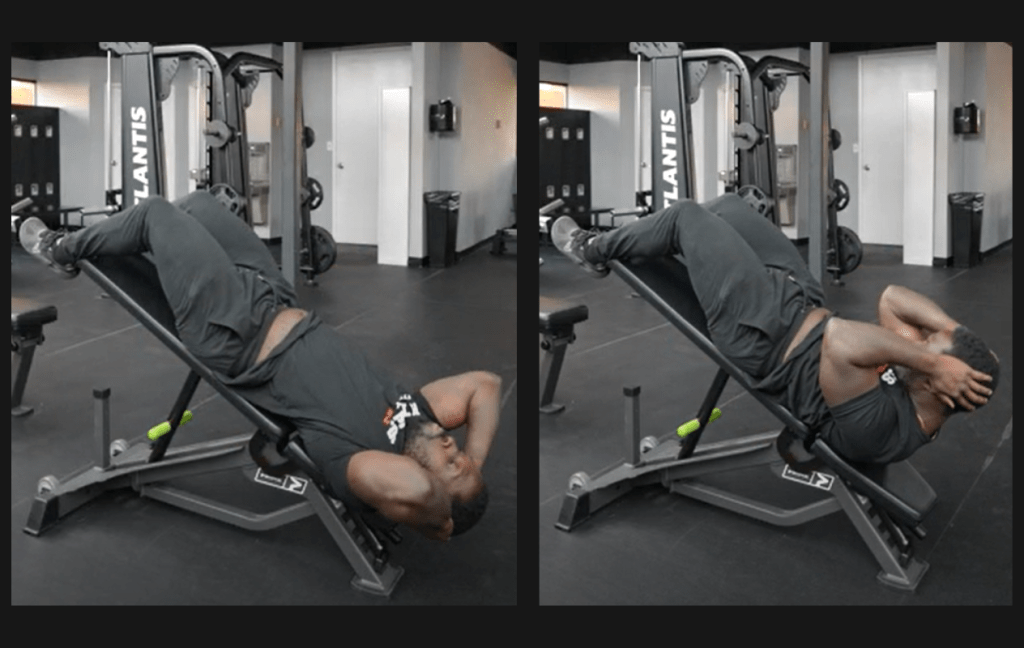
The decline crunch is a classic movement that targets the upper portion of the rectus abdominis. The decline angle adds gravity to the equation, which makes it noticeably harder than a crunch performed on the floor.
The mechanics are simple and effective. As your torso works against a downward angle, the upper abs contract through a longer, more demanding range of motion. That extra resistance builds both muscle definition and the endurance your core needs to hold posture and brace under load.
Muscles worked: Upper rectus abdominis, with support from the obliques.
How to Perform the Decline Crunch
- Set yourself on a decline bench and hook your legs into place. Lie back so your upper body angles toward the floor.
- Place your hands across your chest or lightly behind your head. If your hands are behind your head, do not pull on your neck.
- Contract your abs to lift your shoulders off the bench. Exhale as you crunch up, bringing your rib cage toward your pelvis.
- Lower under control back to the start. Keep tension in the abs and do not let your back arch.
Tips for success:
- Keep your neck neutral and let the abs do the work.
- Control the descent. Dropping back onto the bench wastes the rep and invites injury.
- Add resistance by holding a weight plate across your chest once bodyweight reps feel easy.
3. Hanging Leg Tuck/Raise
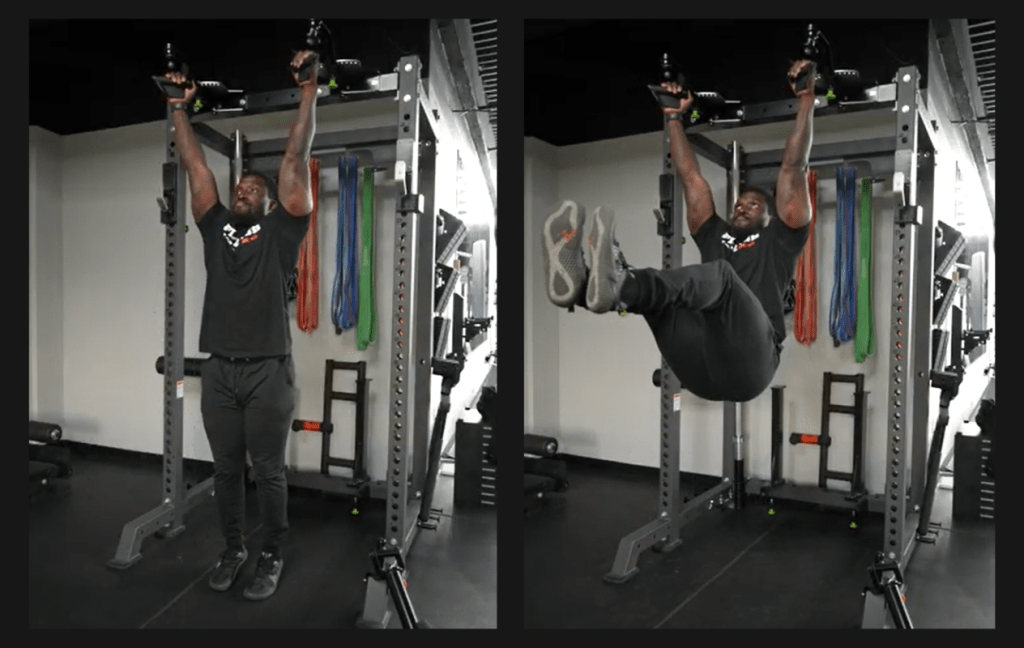
The hanging leg tuck and raise is an advanced movement that hits the lower abs while demanding grip strength and upper-body endurance. It turns a core exercise into a full-body challenge, which is part of why it delivers such strong results.
The biomechanics reward control. Hanging from a bar removes any floor support, so your abs and hip flexors must lift and lower the full weight of your legs while the rest of your core fights to keep you from swinging. Fewer things assist the movement, so the abs shoulder more of the load. Master the tuck first, then progress to straight legs to increase the leverage and the difficulty.
Muscles worked: Lower rectus abdominis, hip flexors, forearms and grip, and the full core.
How to Perform the Hanging Leg Tuck and Raise
- Hang from a pull-up bar with an overhand grip, hands about shoulder-width apart. Let your legs hang straight.
- For the tuck, draw your knees toward your chest as high as you can. For the raise, keep your legs straight and lift them until they reach at least parallel to the floor.
- Keep your core engaged the whole time and control the motion. Do not swing.
- Lower your legs slowly to the starting position, resisting the pull of gravity so momentum never takes over.
Tips for success:
- Minimize the swing. If your body is rocking, you are using momentum instead of muscle.
- Build grip endurance with longer hangs if your hands give out before your abs.
- Scale as needed. Start with bent-knee tucks and progress to straight-leg raises over time.
4. Cable Crunch
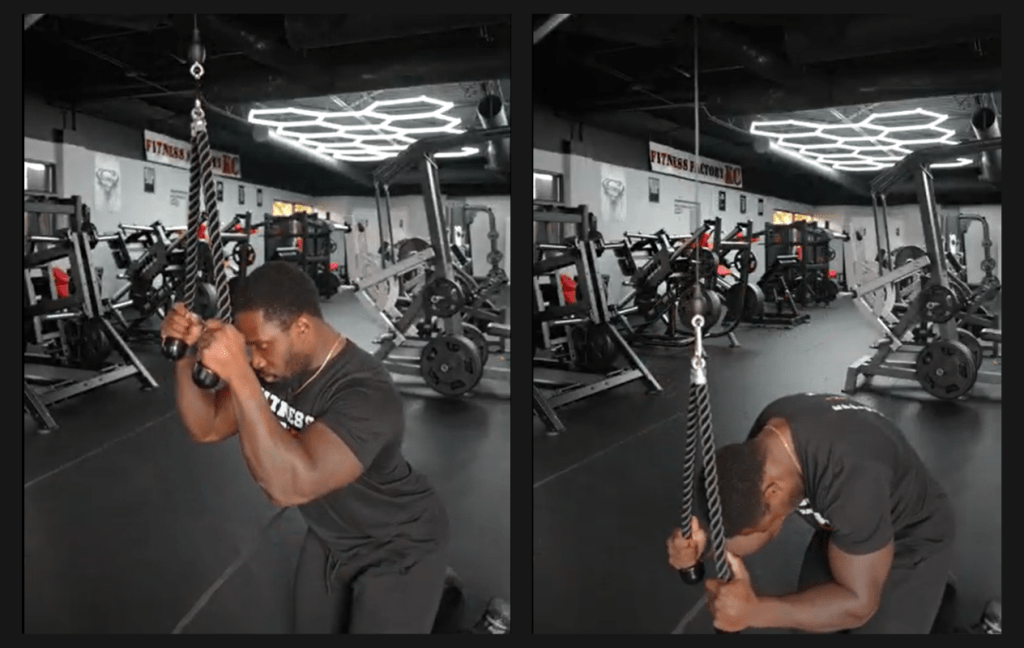
The cable crunch is one of the best exercises for building mass in the upper and mid rectus abdominis. It loads the crunch motion with adjustable weight, which is what makes it a true muscle-building movement rather than an endurance drill.
Progressive overload is the whole point. Because a cable stack lets you add weight in small steps, you can keep challenging the abs week after week the same way you would train any other muscle. The constant tension of the cable also keeps the rectus abdominis loaded through the full range, which drives both strength and definition.
Muscles worked: Upper and mid rectus abdominis, with support from the obliques.
How to Perform the Cable Crunch
- Attach a rope to a high pulley and kneel in front of the stack. Hold the rope on either side of your head, hands next to your ears.
- Keep your hips fixed and round your upper back slightly to pre-load the abs. This is your starting position.
- Contract your abs to pull the weight down, driving your elbows toward your thighs. Exhale as you crunch.
- Return slowly to the start, keeping tension in the abs the entire way.
Tips for success:
- Start light and master spinal flexion before you load up. Form first, weight second.
- Move the weight with your abs, not your arms. The arms only hold the rope in place.
- Keep your hips still. If they swing back and forth, your legs and glutes are taking over.
How to Program These Ab Exercises
Four strong movements only help if you use them well. Train your abs two to four days per week, leaving rest between hard sessions so the muscle can recover and grow. Prioritize quality reps over high numbers. Ten controlled reps beat twenty sloppy ones every time.
| Exercise | Region emphasized | Suggested work | Tempo |
|---|---|---|---|
| Garhammer raise | Lower rectus abdominis | 3 to 4 sets of 6 to 12 reps | Slow and controlled |
| Decline crunch | Upper rectus abdominis | 3 sets of 10 to 15 reps | Two seconds down |
| Hanging leg tuck and raise | Lower abs and hip flexors | 3 sets of 8 to 12 reps | Controlled, no swing |
| Cable crunch | Upper and mid rectus abdominis | 3 to 4 sets of 10 to 15 reps | Full contraction, no rush |
Pair a lower-ab movement with an upper-ab movement in each session so the whole rectus abdominis gets attention. Add weight or reps gradually as the work gets easier. That steady progression is what separates a core that looks trained from one that only gets tired.
Why You Might Not See Your Abs Yet
Building the muscle is only half the equation. Ab definition also depends on body fat. You can own a strong, developed rectus abdominis, but if a layer of fat sits over it, the detail stays hidden. Body fat distribution around the midsection is influenced by genetics, hormones, sleep, and stress, which is why the lower abs are often the last area to show.
Nutrition does the heavy lifting here. A balanced diet that supports muscle and manages body fat is what brings the definition to the surface. Train hard, eat with intent, recover well, and stay consistent. The abs you build will show when the conditions are right.
Frequently Asked Questions
How often should I train my abs?
Two to four sessions per week is plenty for most people. The abs recover like any other muscle, so give them rest between intense workouts rather than hammering them daily.
Can you really target the lower abs?
You cannot isolate the lower abs, because they are simply the lower fibers of the rectus abdominis. You can emphasize them with bottom-up movements like the Garhammer raise and hanging leg raise, which load that region with the weight of your legs.
Do I need weights to build abs?
Bodyweight work builds a strong foundation, but visible muscle usually requires progressive overload. Loaded movements like the cable crunch, and adding weight to raises and crunches, are what grow the rectus abdominis over time.
How long until I see results?
That depends on your starting point, your training consistency, and your body fat. Strength gains come within a few weeks. Visible definition follows once nutrition brings body fat low enough to reveal the muscle underneath.
Final Comments from Fitness Factory KC
Strong, defined abs come from smart training, honest effort, and consistency over time. Focus on control, load the movements progressively, breathe through every rep, and support the work with solid nutrition. Do that, and these four exercises will build a core that performs as well as it looks.
At Fitness Factory KC, our certified coaches help you put it all together. Our 24-hour gym in Overland Park, KS gives you the pull-up bars, cable stacks, decline benches, and free weights you need to train your core the right way, on your schedule. We serve driven people across the Kansas City metro, including Leawood and Lenexa, and we build programs around your goals rather than a generic template.
Ready to train with a plan? Look at our gym memberships or work one-on-one with a coach through our personal training in Overland Park. Book a tour today and start building the core you are after.