
The best exercises for stress relief are brisk walking outdoors, strength training, running, cycling, yoga, Pilates, HIIT, boxing, sled pushes and slow breathing work. Each one lowers stress by burning off the stress response your body has already started, pulling your attention away from worry, and teaching your nervous system to calm down faster afterward. For most people, a mix of strength training and walking is the most reliable place to start.
You do not need hours in the gym to feel the difference. A 10 to 20 minute walk can take the edge off a hard day, and two or three strength sessions plus a few walks each week build lasting stress resilience. A large review of 1,039 trials found that exercise clearly reduced depression, anxiety and psychological distress, and that higher intensity training brought bigger improvements. Below, I rank the 10 exercises I use most with stressed clients, and show you exactly how much to do.
The 10 Best Exercises for Stress Relief Compared
| Exercise | Best for | Minimum dose | Intensity | Where |
|---|---|---|---|---|
| Brisk walking outdoors | Racing thoughts, low energy | 10 to 20 min | Easy to moderate | Anywhere, best in a park |
| Strength training | Anxiety, feeling out of control | 30 to 45 min | Moderate to hard | Gym or home with dumbbells |
| Running or jogging | Racing thoughts, restlessness | 20 to 30 min | Moderate | Outdoors or treadmill |
| Cycling | Tension, joint pain | 20 to 40 min | Easy to moderate | Bike or indoor bike |
| Yoga | Physical tension, poor sleep | 15 to 30 min | Easy | Home or studio |
| Pilates | Tension, scattered focus | 20 to 45 min | Easy to moderate | Mat at home or reformer |
| HIIT | Anger, frustration | 10 to 20 min | Hard | Gym, bike, rower |
| Boxing or heavy bag | Anger, frustration | 10 to 20 min | Hard | Gym or shadowboxing at home |
| Sled pushes and carries | Built up frustration, mental fog | 10 to 15 min | Hard | Gym with turf |
| Breathing and mobility | Acute stress, trouble sleeping | 5 min | Very easy | Anywhere |
Top 10 Best Exercises for Stress Relief, Ranked
1. Brisk Walking Outdoors
Walking is the easiest stress relief exercise to start today, and it works even in small doses. In an analysis of 1,252 people across 10 studies, Barton and Pretty (2010) found the biggest boost to mood and self esteem came from just five minutes of exercise in green space, with parks near water working best.
Walk at a pace where you can talk but would rather not. Leave your phone in your pocket. When clients tell me they are too stressed to train, this is where we start, because it never feels like one more thing to fail at. If you want a daily target, read why walking 10,000 steps actually works.
2. Strength Training
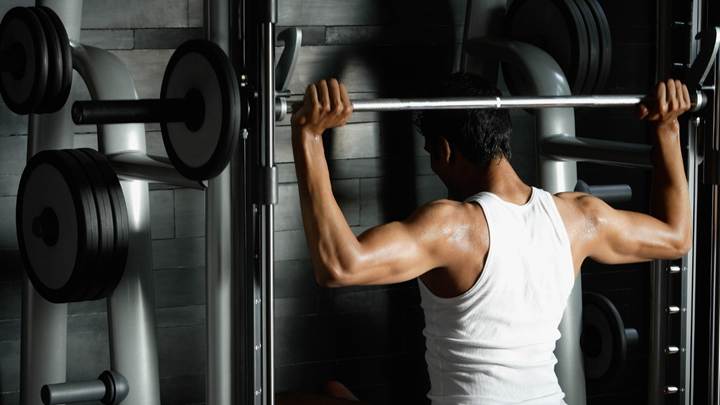
Strength training is my top pick for stress and anxiety because it combines a strong physical outlet with complete mental focus. A meta analysis of 16 trials and 922 people found that resistance training significantly reduced anxiety symptoms (Gordon et al., 2017, Sports Medicine).
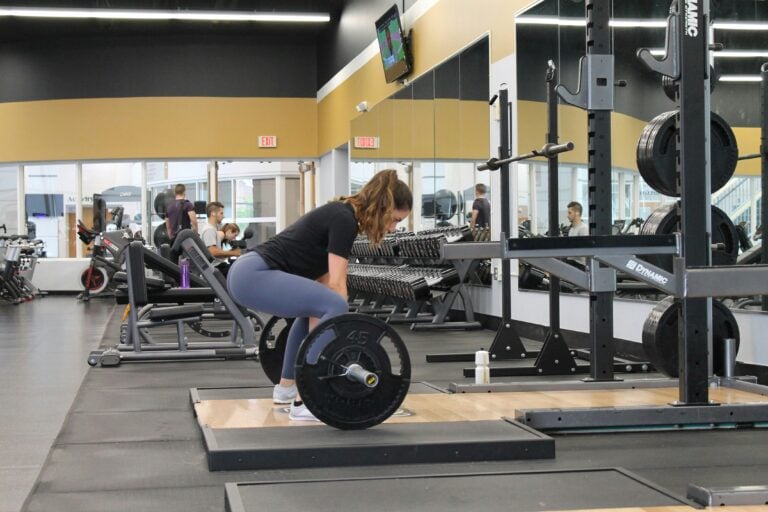
Here is what I see on the training floor. A heavy squat or deadlift asks you to brace your trunk, control your breath and focus on one movement for 30 to 60 seconds. You cannot rehearse tomorrow’s meeting while you do that. Strength training also gives you measurable wins. When stress makes life feel out of control, adding 5 pounds to a lift is proof that you are still moving forward.
Start with two or three full body sessions a week built on squats, hinges, presses and rows. Stop most sets with two or three reps left in the tank. For the long term health side, see our guide to strength training benefits at every age.
3. Running or Jogging
Running relieves stress through rhythm. The steady cadence of footsteps and breathing gives a busy mind something simple to follow. Noetel et al. (2024, BMJ) found walking and jogging among the most effective exercise types for depression, alongside yoga and strength training.
Keep most runs conversational, about 20 to 30 minutes. Steady aerobic exercise like this is one of the most dependable forms of stress relief because you can repeat it almost every day without wearing yourself down. Many people describe the calm that follows a steady run as a runner’s high. Researchers now link part of that feeling to endocannabinoids, the body’s own calming chemicals, although the exact mechanism is still debated.
4. Cycling
Cycling gives you the rhythmic, mind clearing benefits of running with almost no joint impact. That makes it ideal if you carry tension in your back, knees or hips, or if you are heavier and running feels punishing. Ride for 20 to 40 minutes at a steady effort, indoors or out.
5. Yoga
Yoga is the best exercise for calming the body directly. Slow, controlled breathing combined with stretching shifts your nervous system toward its parasympathetic, rest and digest mode. A meta analysis by Pascoe, Thompson and Ski (2017) linked yoga to lower evening and waking cortisol, lower ambulatory systolic blood pressure and a lower resting heart rate.
Use yoga on days when your body feels as tight as your mind. Even 15 minutes of slow flows and long holds before bed can improve how you sleep.
6. Pilates
Pilates relieves stress by asking for precise, slow control of your core and breathing. I am certified in both mat and reformer Pilates, and I use it with clients whose stress shows up as scattered focus and a stiff, guarded posture. The constant attention to alignment works like moving meditation, and the deep core work eases the low back tension many desk workers carry.
Start with 20 minutes of mat work twice a week, or try the reformer for more support and adjustable resistance.
7. HIIT (High Intensity Interval Training)
HIIT is the fastest way to burn off frustration. Short, hard intervals such as 20 seconds all out and 40 seconds easy for 10 to 15 minutes flood your system and then leave you calmer and more tired in a good way. The large umbrella review I mentioned found higher intensity exercise produced bigger improvements in depression and anxiety.
Use HIIT carefully, though. It is itself a stressor. On days when you slept badly or feel run down, choose steady cardio instead. Our article on HIIT vs steady state cardio explains when each one fits.
8. Boxing and Heavy Bag Work
Boxing gives anger somewhere to go. Striking a heavy bag uses rotational power from your hips and trunk, and the combinations demand enough coordination to pull your attention fully into the moment. No bag? Shadowbox for three minute rounds with one minute rests.
9. Sled Pushes and Loaded Carries
Sled pushes and farmer’s carries are one of my favorite starting points for stressed clients who are new to training. You push or carry something heavy, you breathe hard, and that is it. There is very little technique to learn and the injury risk is low, because a sled has no lowering phase that loads your joints. Try 6 to 8 pushes of 20 meters, resting as needed.
10. Deep Breathing Exercises and Mobility Cooldown
Deep breathing exercises for stress relief are the quickest option when you only have five minutes. In a Stanford study of 108 adults, Balban et al. (2023) compared cyclic sighing, box breathing and cyclic hyperventilation with mindfulness meditation, five minutes a day for 28 days. Cyclic sighing improved mood more than mindfulness meditation and lowered breathing rate.
Three stress relief breathing exercises I teach:
- Cyclic sighing. Inhale through your nose, take a second short inhale to fully fill your lungs, then exhale slowly through your mouth. Repeat for five minutes.
- Box breathing. Inhale for 4 seconds, hold for 4, exhale for 4, hold for 4. It works well right before a stressful meeting.
- Diaphragmatic breathing. Place one hand on your chest and one on your belly. Breathe so only the lower hand rises, at a slow pace of about six breaths per minute.
The long exhale is the key. Exhaling slowly activates the vagus nerve and slows your heart rate. Try finishing every workout with three to five minutes of cyclic sighing while lying on your back with your legs up on a bench.
How Does Exercise Help With Stress Relief?
Exercise helps with stress relief by giving your stress response a physical job to do, then training your body to recover from it faster. Stress releases cortisol and adrenaline through your hypothalamic pituitary adrenal (HPA) axis to prepare you to move. Aerobic exercise and strength training both use that response the way it was designed to be used.
Over weeks of training, several things change:
- Faster recovery. Regular exercise trains your nervous system to return to its parasympathetic, calm state more quickly after a stressor. Researchers call this the cross stressor adaptation hypothesis.
- Better mood chemistry. Exercise raises endorphins and endocannabinoids, which ease tension and lift mood.
- Less rumination. Focused effort interrupts the loop of repetitive worried thinking.
- Better sleep. Physical fatigue helps you fall asleep and sleep more deeply, and good sleep makes stress easier to handle.
- A sense of control. Hitting a training goal rebuilds confidence when other parts of life feel uncertain.
The evidence is strong. An umbrella review of 97 reviews covering 1,039 trials and 128,119 people found exercise improved depression, anxiety and psychological distress across healthy adults and clinical groups (Singh et al., 2023, British Journal of Sports Medicine).
Which Exercise Is Best for Your Type of Stress?
The best exercise depends on how stress shows up for you. Match the exercise to the symptom.
| How your stress feels | Best exercises | Why |
|---|---|---|
| Racing thoughts, can’t switch off | Walking, running, cycling | Rhythm gives your mind a simple pattern to follow |
| Anger and frustration | Boxing, HIIT, sled pushes | Hard effort burns off the fight or flight response |
| Anxiety and feeling out of control | Strength training | Total focus plus measurable progress |
| Tight shoulders, jaw or low back | Yoga, Pilates, mobility | Slow movement and breathing release guarded muscles |
| Exhausted and burned out | Walking outdoors, yoga, breathing | Lowers stress without adding more strain |
Quick Stress Relief Exercises for Work or Home
The quickest stress relief exercises take two to five minutes and need no equipment, so you can do them at your desk, in the office or at home. Use them between meetings or whenever you feel tension building.
- Cyclic sighing (5 minutes). The breathing exercise described above, done seated with your eyes closed.
- Chest opener stretch (1 minute). Clasp your hands behind your back, squeeze your shoulder blades together and lift your chest. It reverses the rounded posture that long desk hours create.
- Neck side stretch (1 minute). Drop one ear toward your shoulder and hold for 30 seconds per side to ease tension that can build into a stress headache.
- Progressive muscle relaxation (3 minutes). Tense one muscle group for five seconds, then release it fully, working from your feet to your face. This somatic exercise teaches you to notice and let go of tension.
- Stair climb or brisk walk (5 minutes). A short burst of movement raises your heart rate and clears your head faster than another coffee.
How Much Exercise Do You Need to Relieve Stress?
You feel short term relief after a single session of 10 to 30 minutes, and lasting change after several weeks of consistent training. For most adults, I aim for the CDC baseline: at least 150 minutes of moderate activity per week plus two or more strength sessions.
Consistency matters more than any single workout. The Singh review found programs of 12 weeks or less produced some of the strongest improvements, which tells me you do not need to wait months to feel better. Commit to 4 weeks and judge it then.
A Weekly Stress Relief Workout Plan
| Day | Session | Time |
|---|---|---|
| Monday | Full body strength training, then 3 min breathing | 45 min |
| Tuesday | Brisk walk outdoors | 20 to 30 min |
| Wednesday | Yoga or Pilates | 20 to 30 min |
| Thursday | Full body strength training, then sled pushes | 45 min |
| Friday | Walk or easy bike ride | 20 to 30 min |
| Saturday | Run, HIIT or boxing (if well rested) | 20 to 30 min |
| Sunday | Rest, gentle walk and 5 min cyclic sighing | 10 to 20 min |
Drop the hardest session when work or family stress spikes. The plan should lower your stress, not add to it. For help keeping it going, read how to build a workout routine you can sustain.
When Exercise Makes Stress Worse
Exercise can add stress when the total load is more than your body can recover from. Watch for these signs:
- Your resting heart rate stays elevated for several days
- Sleep gets worse even though you are training more
- Your strength drops across two or three sessions in a row
- You feel irritable or dread every workout
The usual causes are too much high intensity work, poor sleep and very aggressive dieting stacked on top of a stressful job. Swap hard sessions for walking, yoga and breathing until you feel recovered. And if stress, anxiety or low mood is persistent or affecting daily life, speak with your doctor or a mental health professional. Exercise works best as part of that care, not instead of it.
How I Coach Stressed Clients at Fitness Factory KC
I have spent more than seven years coaching clients, and many of them came to me stressed, not just out of shape. I am certified through NASM and NCSF, coach bodybuilding through J3 University, teach mat and reformer Pilates, and use Rock Tape IASTM, cupping and taping to help clients recover. My background is in Health and Physical Education.
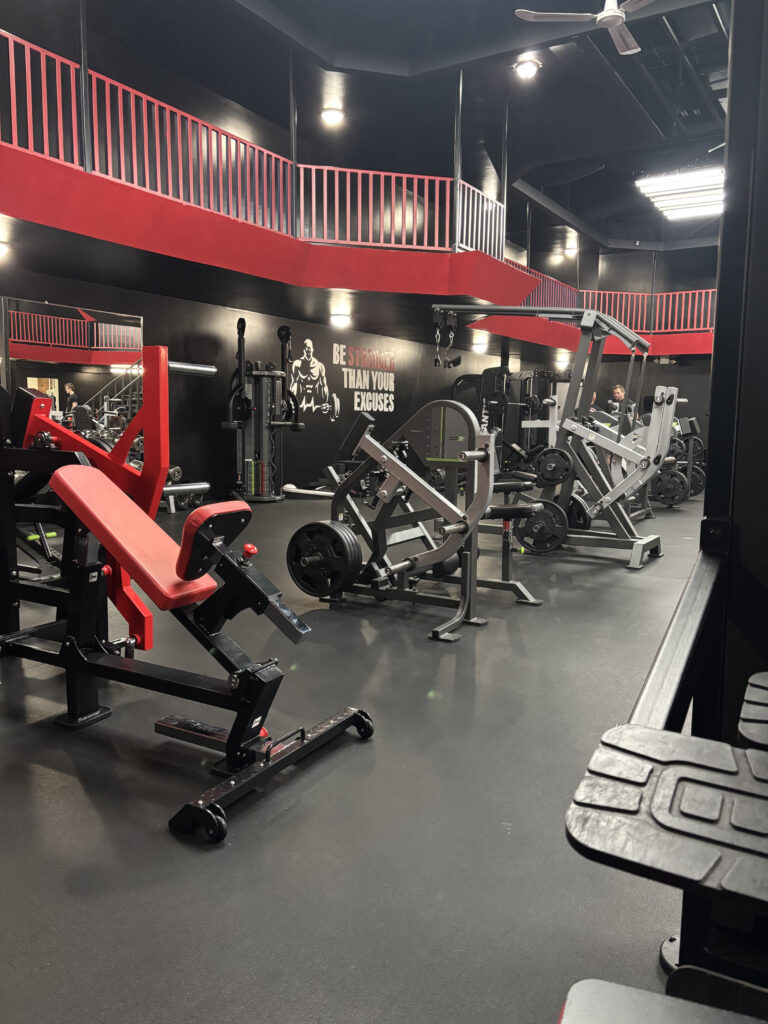
With stressed clients, I remove decisions. They walk into our private 24/7 training gym in Overland Park with a written plan, a coach who knows their week, and a quiet floor with capped membership. If walking into a gym feels like one more stressor, our tips for overcoming gym anxiety are a good first read. When you are ready, book a free assessment through our personal training in Overland Park page and I will build your stress relief plan with you.
Stress Relief Exercise FAQs
What is the best exercise for stress relief?
Strength training and brisk walking are the best all round choices. Strength training reduces anxiety and builds confidence, while walking lowers stress quickly with almost no barrier to starting.
How long should you exercise to relieve stress?
Ten to 30 minutes is enough for short term relief. For lasting results, aim for 150 minutes of moderate activity per week plus two strength sessions.
Does lifting weights help with stress and anxiety?
Yes. A meta analysis of 16 trials found resistance training significantly reduced anxiety symptoms, and the focus it demands interrupts worried thinking.
Which exercise lowers cortisol?
Yoga, walking and slow breathing are the most calming. Research links yoga to lower evening and waking cortisol. Hard exercise raises cortisol briefly, but regular training improves how your body handles stress over time.
Can exercise make stress worse?
Yes, if you train hard while sleeping poorly or dieting aggressively. Reduce intensity and focus on walking, yoga and breathing until you recover.
How can I relieve stress in 5 minutes?
Do five minutes of cyclic sighing: two inhales through the nose, then a long, slow exhale through the mouth. A five minute walk outside also helps.
Is it better to exercise in the morning or evening for stress?
The best time is the one you can repeat. Morning workouts start the day calm, while evening sessions burn off the day’s stress. Keep hard sessions at least two to three hours before bed.
Is aerobic exercise good for stress relief?
Yes. Aerobic exercise such as walking, jogging and cycling is one of the most reliable forms of stress relief because it is rhythmic, easy to repeat daily and improves sleep.
What are the best breathing exercises for stress relief?
Cyclic sighing, box breathing and diaphragmatic breathing are the best options. In a Stanford study, five minutes a day of cyclic sighing improved mood more than mindfulness meditation.