

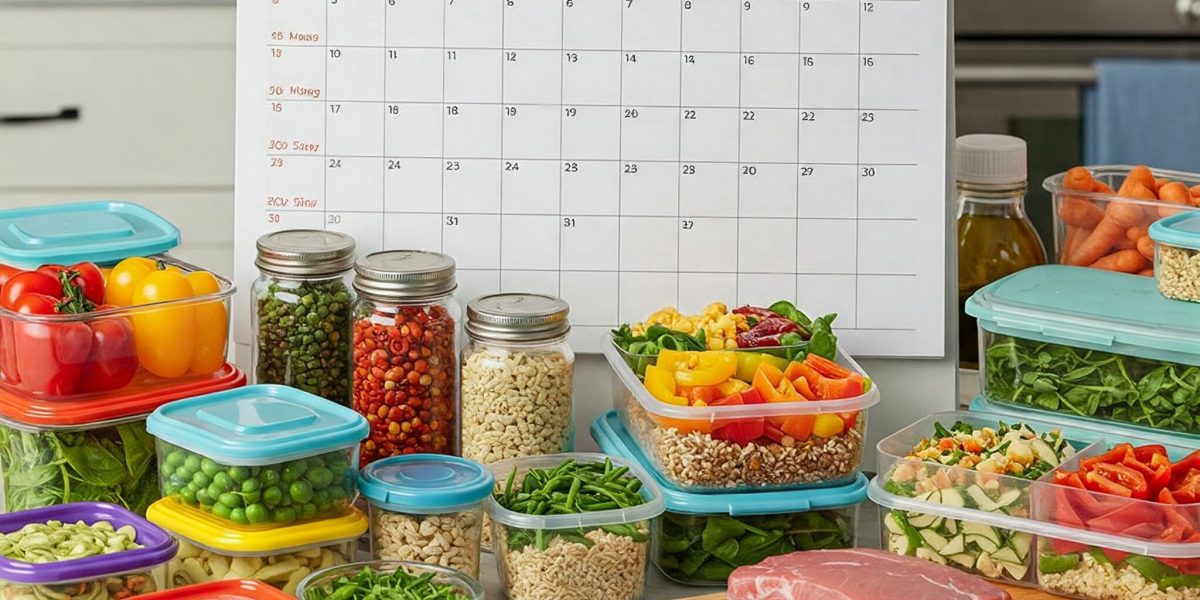
Meal prep is the practice of cooking and portioning several meals in advance so your daily nutrition matches your training goals without daily decisions. For lifters, it solves one specific problem. Muscle needs a steady protein supply and a predictable calorie intake. Neither happens reliably when you decide what to eat while hungry at 7pm.
The version most people try fails within three weeks. They cook six identical chicken and rice containers on Sunday, eat four, and throw two away. That is not a discipline problem. It is a planning problem. This guide covers what to hit, how much to cook, how long it keeps, and how to build a week in about 90 minutes.
Start With Protein, Not Recipes
Protein is the one macronutrient that determines whether your training produces muscle. Set it first and build meals around it.
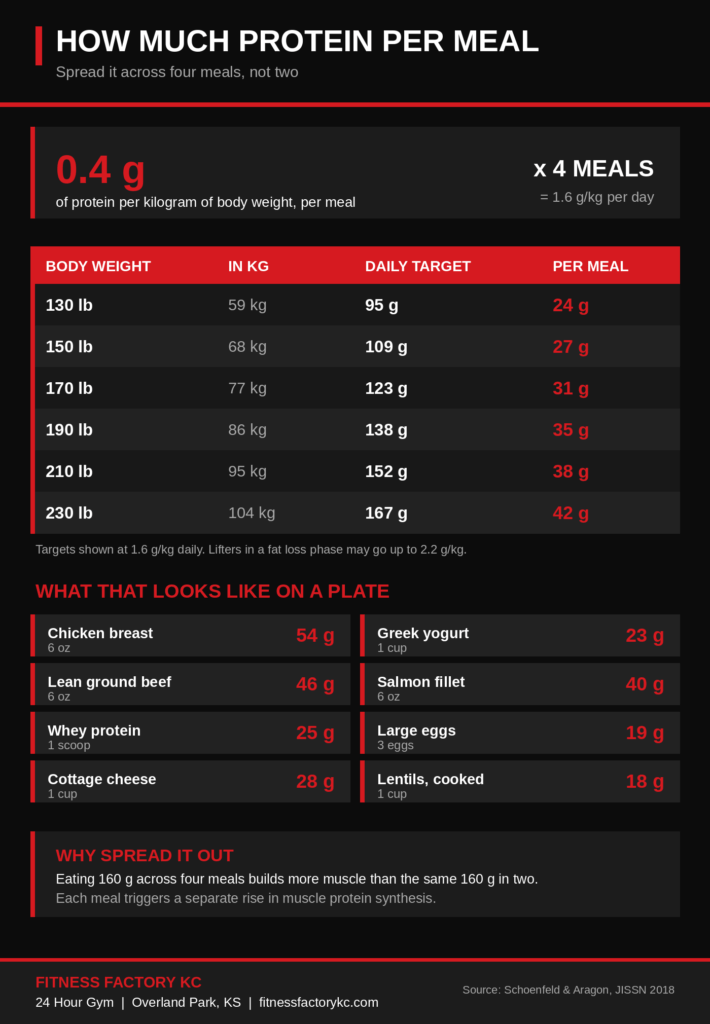
Research by Schoenfeld and Aragon in the Journal of the International Society of Sports Nutrition found that lifters should target roughly 0.4 grams of protein per kilogram of body weight per meal, across at least four meals. That lands you at a minimum of 1.6 grams per kilogram daily. In a fat loss phase, up to 2.2 grams per kilogram helps protect muscle.
Distribution matters more than most lifters realize. The same 160 grams eaten across four meals produces a stronger muscle-building response than 160 grams eaten in two. Each meal triggers its own rise in muscle protein synthesis.
Then Set Carbs and Fats
Carbohydrates fuel training. Cutting them low makes heavy sessions feel harder and recovery slower. Whole grains, potatoes, rice, oats, and fruit all work.
Fats support hormone production and nutrient absorption. Roughly 20 to 30 percent of daily calories from fat suits most lifters. Olive oil, nuts, seeds, eggs, and fatty fish cover it.
The 90 Minute Batch Plan
Cook in components, not complete meals. Components mix and match, which is how you avoid eating the same dish five days running.
| Time | Task |
|---|---|
| 0 to 10 min | Preheat oven to 400°F. Start rice or quinoa. Put a pot of water on. |
| 10 to 25 min | Season proteins. Sheet pan one, sheet pan two. Both into the oven. |
| 25 to 45 min | Chop vegetables. Roast on a third pan or steam on the stove. |
| 45 to 60 min | Boil eggs. Mix a sauce or two. Portion grains into containers. |
| 60 to 80 min | Pull proteins. Rest, then slice. Let everything cool with lids off. |
| 80 to 90 min | Portion, label with the cook date, and refrigerate. |
Cook two proteins, two carbohydrate sources, and three vegetables. That combination yields far more meal variety than cooking one dish in bulk.
Prep only three to four days at a time. Most cooked food holds its quality for about four days. Prepping seven days of meals on Sunday means eating degraded food by Friday, which is the fastest way to quit.
Storage and Food Safety
This is where most meal prep guides go quiet, and it is the part that determines whether your food is safe to eat.
Cool food fast. Get cooked food into the fridge within two hours, or one hour if your kitchen is above 90°F. Bacteria multiply quickly in the range between 40°F and 140°F.
Keep the fridge at 40°F or below. Most people never check. A cheap fridge thermometer settles it.
Label every container with the cook date. Guessing is how food poisoning happens.
Cool food with the lid off for about 30 minutes before sealing. Trapped steam turns into condensation, which makes food soggy and shortens its life.
Keeping It Edible All Week
Boredom ends more meal prep attempts than anything else. Four fixes handle it.
- Change the sauce, not the meal. The same chicken and rice becomes a different meal with chimichurri, teriyaki, or buffalo sauce. Store sauces separately.
- Undercook vegetables slightly. They finish cooking when you reheat, so they arrive properly cooked instead of mushy.
- Keep crunchy items separate. Nuts, seeds, and fresh greens go in at eating time, never before.
- Freeze days four and five. Cook five portions, refrigerate three, freeze two. Move them to the fridge the night before.
Reheat Without Ruining It
Lean protein dries out because it has little fat to hold moisture. Add a splash of water or broth, cover the container, and reheat at reduced microwave power for longer. High power for two minutes turns chicken breast to rubber.
Reheat leftovers to 165°F. A skillet over medium heat with a lid works better than a microwave for anything breaded or crisp.
Common Meal Prep Mistakes
| Mistake | What happens | Fix |
|---|---|---|
| Prepping seven days at once | Food degrades by day five | Prep 3 to 4 days, freeze the rest |
| Cooking one recipe in bulk | Boredom by Wednesday | Cook components, mix and match |
| Sealing hot food | Condensation, soggy texture, faster spoilage | Cool 30 minutes with the lid off |
| Eyeballing portions | Calories drift, progress stalls | Weigh protein and carbs for the first month |
| No protein at breakfast | Most of your protein lands at dinner | Spread it across four meals |
| Skipping labels | Guesswork about what is still safe | Write the cook date on every container |
Nutrition Coaching in Overland Park
Meal prep works when the targets behind it are right. Guessing at calories and protein is where most people lose months.
Fitness Factory KC is a 24-hour private gym at 10550 W 103rd St in Overland Park, KS, serving Johnson County, Leawood, and Lenexa. Owner and head coach Shavane Morrison is certified through NASM and NCSF and coaches bodybuilding through J3 University, including contest prep where nutrition precision decides the outcome.
We build nutrition targets around your training, your schedule, and food you will actually eat.
Frequently Asked Questions
How long does meal prep last in the fridge?
Most cooked meals stay safe for three to four days when refrigerated at 40°F or below. Cooked grains and roasted vegetables can reach five days, while cooked seafood is closer to two to four. Freeze anything you will not eat within four days.
How much protein should I eat per meal to build muscle?
Aim for about 0.4 grams of protein per kilogram of body weight per meal, across at least four meals. For a 170 pound lifter that is roughly 31 grams per meal and 123 grams per day. Spreading protein evenly builds more muscle than loading it into one or two meals.
Can I meal prep for a whole week at once?
You can cook once for a week, but only if you freeze the later portions. Refrigerated food loses quality after about four days, so refrigerate three or four days of meals and freeze the rest.
How do I stop meal prepped chicken from drying out?
Slightly undercook it, let it rest before slicing, and store it with a little sauce or broth. When reheating, add a splash of liquid, cover the container, and use lower power for a longer time.
Is meal prepping cheaper than eating out?
Yes, in almost every case. Buying proteins and grains in bulk and cooking in batches costs far less per meal than takeout, and planning your shopping list cuts both impulse buys and food waste.
What containers work best for meal prep?
Airtight glass containers hold up best. They do not stain or absorb odors, they reheat safely, and their seal keeps food fresher than most plastic. Single-portion sizes make tracking easier.