To grow stubborn calves, you have to train both calf muscles through a full range of motion, load the deep stretch, and give them enough volume to force adaptation. The calf is a two-muscle system: the gastrocnemius, which responds to straight-leg raises, and the soleus, which responds to bent-knee raises. Most lifters train only one, use a short range of motion, and run too little volume. Fix those three things and calves that have not changed in years will start to grow.
The reason calves feel impossible is not usually genetics, even though genetics play a part. Calves are dense with slow-twitch endurance fibers, so they tolerate fatigue and resist growth signals that easily build the chest or arms. They also get less than half the weekly volume most lifters give their upper body. The solution is not daily high-rep abuse. It is structured hypertrophy training: both calf muscles, deep stretch, controlled tempo, progressive overload, and roughly nine to twelve hard sets per muscle each week. Below is the science and the exact protocol.
Know the Two Muscles You Are Training
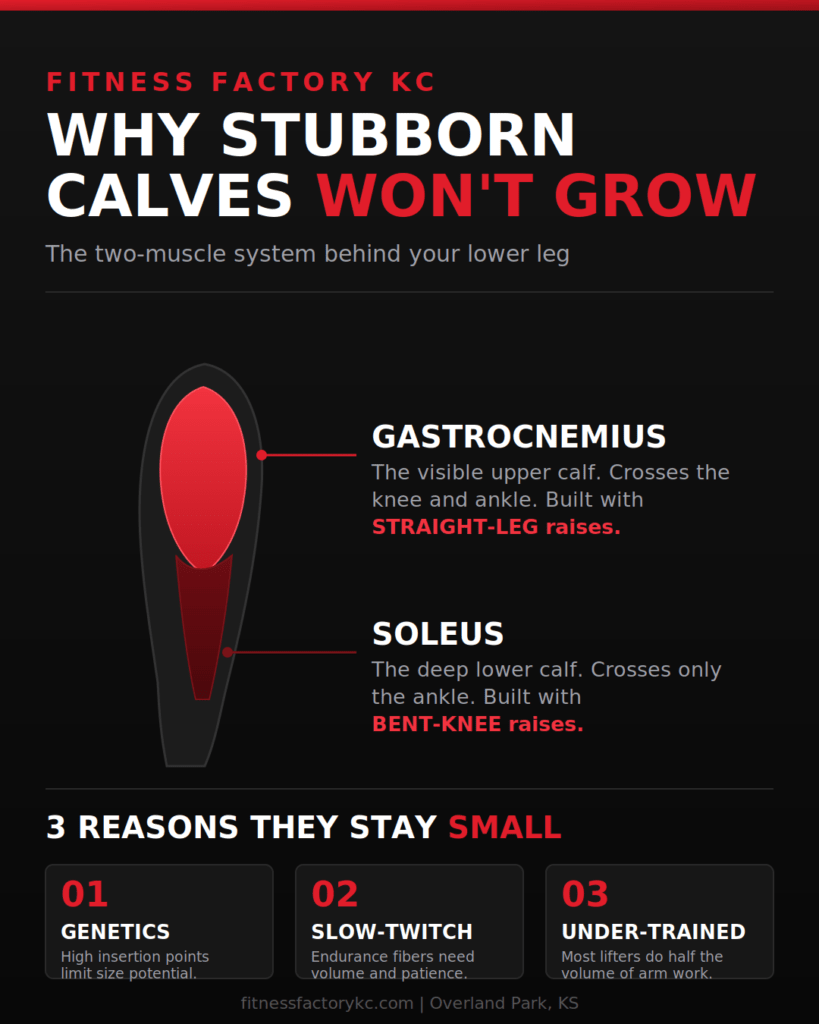
Calf development lives or dies on anatomy. The lower leg is powered by the triceps surae, a group made of two muscles that behave very differently.
The gastrocnemius is the large, visible muscle that gives the calf its diamond shape. It has two heads and crosses both the knee and the ankle. Because it crosses the knee, it works hardest when the leg is straight. Standing calf raises, leg-press calf presses, and donkey raises are its primary drivers.
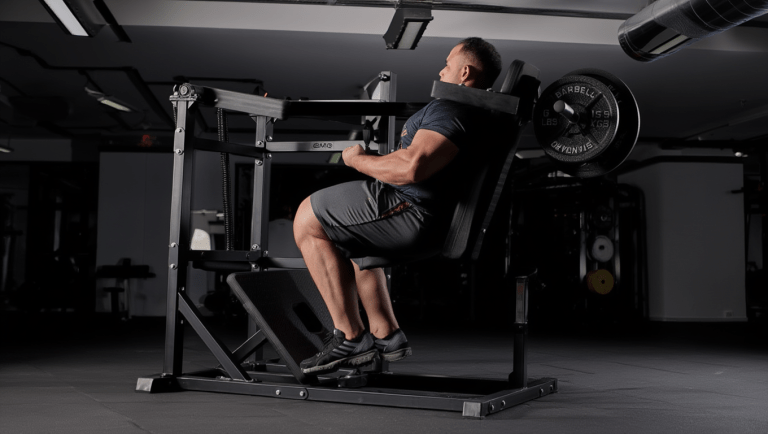
The soleus sits underneath the gastrocnemius. It crosses only the ankle, so it stays active when the knee is bent. This is the muscle most lifters neglect. A developed soleus pushes the gastrocnemius outward and widens the entire lower leg. You build it with seated, bent-knee calf raises. Skip it, and half your calf never grows.
Why Calves Are So Stubborn
Three factors explain why calves resist growth. Understanding them tells you exactly what to change.
- Genetics and insertion points. Lifters whose calf muscles attach high on the lower leg have shorter muscle bellies and less room to build size. You cannot change your tendon length, but you can maximize the muscle you have.
- Slow-twitch fiber dominance. The calves are built for endurance, standing, and walking all day. These fibers resist fatigue, so they need more total work and a strong stretch stimulus to grow.
- Chronic under-training. Most programs give calves a fraction of the volume given to arms or shoulders, often as an afterthought at the end of leg day. Predictably weak input produces predictably weak output.
The Calf Growth Protocol
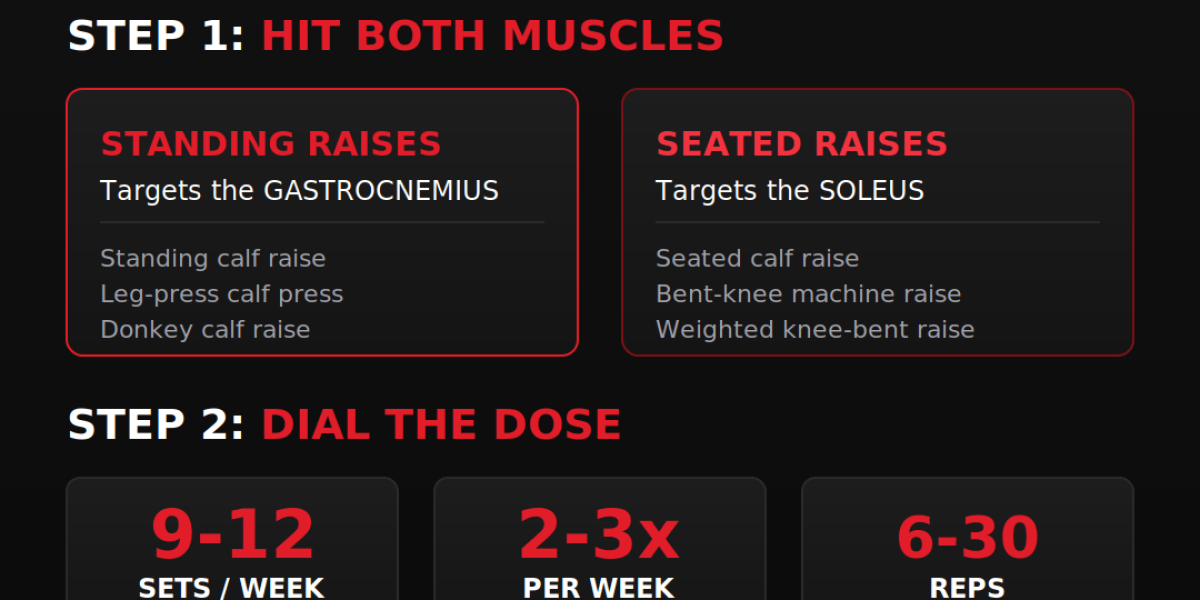
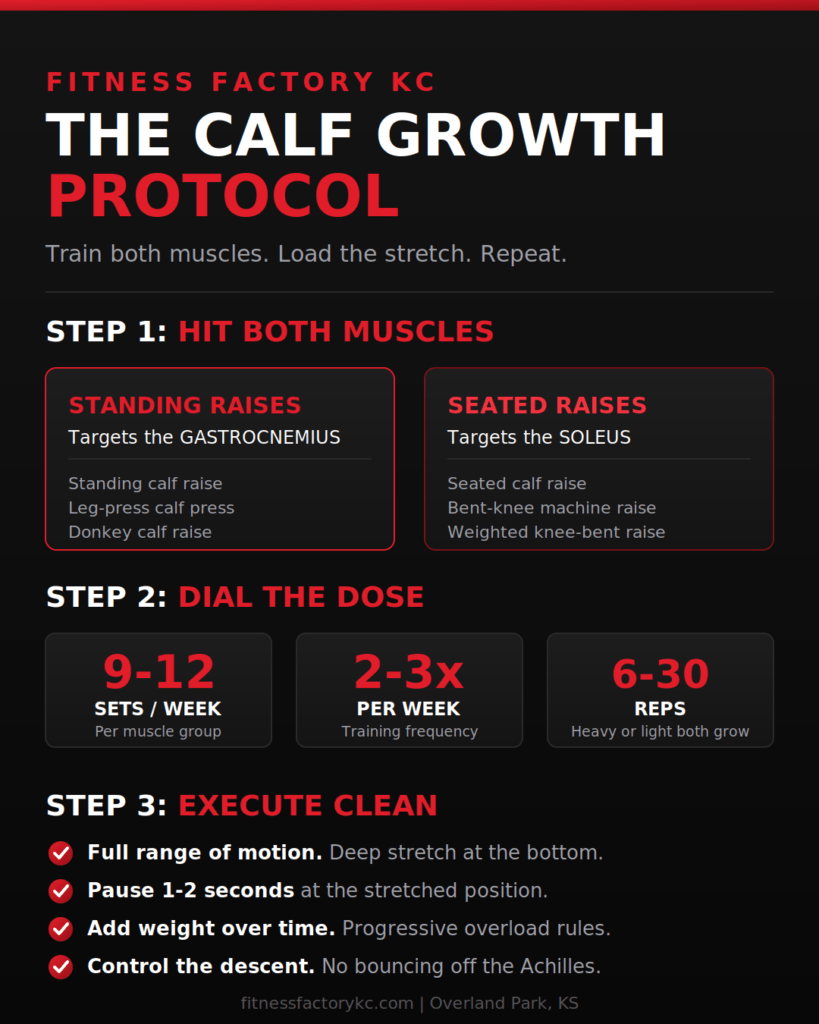
Building stubborn calves comes down to three steps: train both muscles, apply the right dose, and execute every rep cleanly. The infographic below sums up the plan.
Step 1: Train Both Muscles
You need a straight-leg movement for the gastrocnemius and a bent-knee movement for the soleus. Pick one of each and rotate as needed.
| Muscle | Position | Best Exercises |
|---|---|---|
| Gastrocnemius | Straight leg | Standing calf raise, leg-press calf press, donkey calf raise |
| Soleus | Bent knee | Seated calf raise, bent-knee machine raise |
Foot position also shifts emphasis. Research by Nunes and colleagues found that pointing the toes outward biases the inner gastrocnemius head, while pointing them inward biases the outer head. Straight ahead trains both evenly. Use a neutral stance as your default and rotate angles to fill in weak areas.
Step 2: Dial the Dose
Volume drives calf growth more than any single exercise. Research on calf training volume points to roughly nine to twelve hard sets per muscle each week as the effective range, with diminishing returns past that. Train each calf muscle two to three times per week so the stimulus stays frequent.
Load is flexible. A 2020 study by Schoenfeld and colleagues found that heavy sets of six to ten reps and lighter sets of twenty to thirty reps produced similar calf growth. What matters is taking sets close to failure. Choose a weight you can control through a full range and push each set hard.
Step 3: Execute Every Rep Clean
Technique separates calves that grow from calves that just burn. Four rules matter most.
- Use a full range of motion. Drop the heel into a deep stretch at the bottom of every rep. The stretched position is where most of the growth stimulus lives.
- Pause at the stretch. Hold the bottom for one to two seconds. This kills the tendon bounce that steals tension from the muscle.
- Control the descent. Lower slowly instead of dropping. Bouncing off the Achilles tendon feels productive but robs the muscle of work.
- Add weight over time. Progressive overload is non-negotiable. If the load never climbs, the muscle has no reason to adapt.
A Sample Weekly Calf Plan
Here is a simple structure that hits every principle above. Adjust the exercises to your equipment.
| Day | Exercise | Sets | Reps |
|---|---|---|---|
| Day 1 | Standing calf raise | 4 | 8 to 12 |
| Day 1 | Seated calf raise | 3 | 15 to 20 |
| Day 2 | Leg-press calf press | 4 | 10 to 15 |
| Day 2 | Seated calf raise | 3 | 20 to 30 |
That is roughly seven sets for the gastrocnemius and six for the soleus each week. Add a third day if your calves recover well and progress stalls.
How Long Until You See Growth
Set realistic expectations. Most lifters who train calves hard and consistently see meaningful change within three to six months. Those with high insertion points or low training frequency may need a year or more. Even in the toughest genetic cases, consistent work still builds strength and function. The lifters who quit are almost always the ones who trained calves twice a month with half reps and blamed their genes.
Train Calves the Right Way at Fitness Factory KC
Stubborn calves need proper equipment and a coach who understands loading and range of motion. Fitness Factory KC in Overland Park, KS gives you standing and seated calf stations, leg-press setups, and certified trainers who program progressive overload around your body. Our NASM and ACE certified coaches build the full plan, correct your execution, and hold you accountable.
Visit us at 10550 West 103rd St, Overland Park, KS 66214, or call (913) 395-9015 to book a tour or claim a free kickstart session. Bring the calves. We will handle the plan.
Frequently Asked Questions
How do you grow stubborn calves?
Grow stubborn calves by training both the gastrocnemius and soleus, using a full range of motion with a deep stretch, and running nine to twelve hard sets per muscle each week. Standing raises build the gastrocnemius; seated raises build the soleus. Consistency over three to six months is what produces visible size.
Why won’t my calves grow no matter what I do?
Calves usually stall for three reasons: genetics with high insertion points, slow-twitch fibers that resist growth, and chronic under-training. Most lifters also skip the soleus and cut their range of motion short. Fixing volume, range, and soleus work restarts progress for most people.
Should I train calves heavy or light?
Both work. A 2020 study by Schoenfeld found heavy sets of six to ten reps and light sets of twenty to thirty reps grew calves equally, as long as sets are taken close to failure. Use heavy work for standing raises and higher reps for seated raises.
How often should I train calves?
Train calves two to three times per week for the fastest growth. Because the calves are endurance-focused and recover quickly, frequent training keeps the growth stimulus high. Spread nine to twelve weekly sets per muscle across those sessions.
What is the difference between standing and seated calf raises?
Standing calf raises keep the knee straight and target the gastrocnemius, the visible upper calf. Seated calf raises bend the knee and target the soleus, the deep lower calf. Training both is essential for complete lower-leg development.