

To grow your shoulders, you need to train all three heads of the deltoid (anterior, lateral, and posterior) using a mix of heavy compound presses and targeted isolation work, then apply progressive overload week after week. The lateral deltoid is the muscle that creates shoulder width, so it deserves the most dedicated volume. The top 10 shoulder exercises below cover every head of the deltoid and are organized by their biomechanical role, from overall mass to the rounded three-dimensional look. Each one is chosen for how it loads the muscle, not just how it feels.
Shoulder growth comes down to three drivers: mechanical tension, sufficient weekly volume, and a full range of motion that loads the muscle in its stretched position. Heavy presses build overall size and pressing strength, while lateral raises and rear delt work shape the width and the back of the delt. Train shoulders two times per week, keep most working sets in the 8 to 15 rep range, and treat clean technique as more important than the number on the dumbbell. Do that consistently, and your shoulders have a clear reason to grow.
The 10 Best Shoulder Exercises at a Glance
- Standing Overhead Barbell Press
- Seated Dumbbell Shoulder Press
- Arnold Press
- Dumbbell Lateral Raise
- Cable Lateral Raise
- Reverse Pec Deck
- Face Pull
- Bent-Over Dumbbell Rear Delt Fly
- Upright Row
- Push Press
Understand Your Shoulder Anatomy First
The deltoid is one muscle with three separate heads, and each head has its own line of pull. Training all three is the difference between flat shoulders and capped, three-dimensional delts.
- Anterior deltoid (front head): Drives shoulder flexion and presses overhead. It already gets heavy stimulus from chest and pressing work, so it rarely needs extra isolation.
- Lateral deltoid (side head): Handles shoulder abduction, the motion of lifting the arm out to the side. This is the head that builds visible width, and it responds best to direct, higher-volume isolation.
- Posterior deltoid (rear head): Pulls the arm backward and externally rotates the shoulder. A well-built rear delt gives the shoulder its rounded look from the side and supports posture.
The lateral and posterior heads are usually the most underdeveloped, mostly because lifters rely on pressing and let the front delt take over. Balanced exercise selection fixes that.
Best Compound Exercises for Overall Shoulder Mass
These presses load the most muscle and the most weight, which makes them your foundation for size and strength.
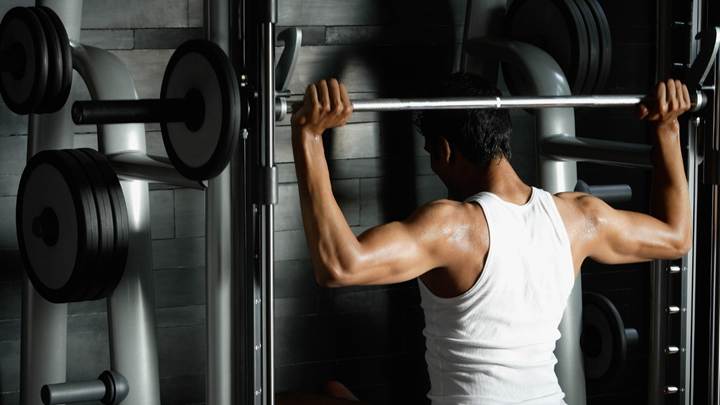
1. Standing Overhead Barbell Press.
Press a barbell from your upper chest to a locked-out position overhead while keeping your core braced and ribs down. The standing version recruits the front and side delts under heavy load and trains total-body stability at the same time. It is the single most effective movement for raw pressing strength and is the anchor of any serious shoulder workout.
2. Seated Dumbbell Shoulder Press.
Pressing two dumbbells from shoulder level removes lower-body momentum and lets each arm work independently. Dumbbells allow a slightly deeper start position than a barbell, which loads the delts through a longer range. This corrects side-to-side imbalances that a barbell can hide.
3. Arnold Press.
Start with palms facing you, then rotate the dumbbells outward as you press overhead. The rotation takes the shoulder through a longer arc and increases time under tension across the front and side heads. The result is more total work per rep than a standard press.
10. Push Press.
Use a small dip and drive from the legs to move heavier loads than a strict press allows. The push press overloads the delts with weight you could not press cold, which builds strength you can later carry back into your strict pressing. Treat it as a power and overload tool, not your only press.
Best Exercises for Shoulder Width
Width comes from the lateral deltoid, and the lateral deltoid grows from volume and a smart resistance profile.
4. Dumbbell Lateral Raise.
Raise the dumbbells out to your sides with a slight elbow bend until your arms reach shoulder height. This is the most direct lateral deltoid builder. One thing to understand biomechanically: the dumbbell version is hardest at the top, where the muscle is contracted, and easiest at the bottom, where it is stretched. That means the stretched position gets the least load.
5. Cable Lateral Raise.
Running a cable across your body keeps steady tension on the lateral deltoid at the bottom of the movement, the exact point where the dumbbell version goes light. Research comparing the two found similar overall growth, but the cable keeps the muscle loaded throughout its lengthened range, which is why many lifters add it alongside dumbbells rather than choosing one. Use a full, controlled range and let the muscle do the lifting.
9. Upright Row.
Pull a barbell or dumbbells up along the front of your body to roughly chest height, leading with the elbows. This trains the lateral delt and upper traps together. Use a grip slightly wider than shoulder width and stop the pull below the chin to keep the shoulder joint in a safe position.
Best Exercises for Rear Delt Development
The posterior deltoid completes the three-dimensional look and balances all the front-side pressing you do.
6. Reverse Pec Deck.
Facing the pad and pulling the handles back in a wide arc isolates the rear delt with constant machine tension and almost no momentum. The fixed path makes it one of the easiest rear delt movements to perform with clean form, which is why it produces such consistent activation.
7. Face Pull.
Pull a rope toward your forehead while rotating your hands outward at the finish. The face pull targets the rear delt and the small external rotators of the shoulder. Beyond size, it strengthens the muscles that support healthy shoulder mechanics and balanced posture.
8. Bent-Over Dumbbell Rear Delt Fly.
Hinge at the hips and raise the dumbbells out to the sides with soft elbows. Keeping the torso fixed forces the rear delts to do the work instead of the upper back. Use lighter weight and a deliberate squeeze, since this is a small muscle that responds to control rather than load.
Top 10 Shoulder Exercises by Muscle Head
| Exercise | Primary Head | Type | Suggested Reps |
|---|---|---|---|
| Standing Overhead Press | Anterior and lateral | Compound | 5 to 8 |
| Seated Dumbbell Press | Anterior and lateral | Compound | 8 to 10 |
| Arnold Press | Anterior and lateral | Compound | 8 to 12 |
| Dumbbell Lateral Raise | Lateral | Isolation | 12 to 20 |
| Cable Lateral Raise | Lateral | Isolation | 12 to 20 |
| Reverse Pec Deck | Posterior | Isolation | 12 to 15 |
| Face Pull | Posterior | Isolation | 15 to 20 |
| Bent-Over Rear Delt Fly | Posterior | Isolation | 12 to 15 |
| Upright Row | Lateral and traps | Compound | 10 to 12 |
| Push Press | Anterior and lateral | Power and overload | 3 to 6 |
Sample Shoulder Workout
Here is how these movements come together in one balanced session:
- Warm-Up: Five to ten minutes of light cardio and shoulder mobility, including external rotations.
- Standing Overhead Press: Four sets of 5 to 8 reps.
- Seated Dumbbell Press: Three sets of 8 to 10 reps.
- Cable Lateral Raise: Three sets of 12 to 15 reps.
- Dumbbell Lateral Raise: Three sets of 15 to 20 reps.
- Reverse Pec Deck: Three sets of 12 to 15 reps.
- Face Pull: Two sets of 15 to 20 reps to finish.
Tips to Grow Your Shoulders Faster
- Prioritize the side and rear delts. The front delt already works hard during chest and pressing. Give the lateral and posterior heads the extra direct volume they need.
- Apply progressive overload. Add weight, reps, or sets over time so the muscle keeps adapting. Mechanical tension is the main driver of growth.
- Use a full range of motion. Load the muscle in its stretched position, not just the top of the rep.
- Control your raises. Swinging the weight up shifts the load onto momentum and the traps. Slow, deliberate reps keep tension on the target head.
- Recover well. Muscle grows during rest. Leave at least 48 hours between hard shoulder sessions and respect recovery.
Frequently Asked Questions
How do I make my shoulders look wider?
Focus on the lateral deltoid, the side head responsible for width. Train it with high-volume lateral raises, both dumbbell and cable, and keep the reps controlled. Pressing alone builds the front delt but does little for width.
How many exercises should I do for my shoulders?
Most lifters do well with four to six shoulder exercises per session. Choose one or two compound presses for mass, then two to three isolation moves for the lateral and rear heads. Aim for roughly 12 to 20 weekly sets across the whole deltoid.
How often should I train my shoulders to grow them?
Training the shoulders two times per week is ideal for most people. Leave at least 48 hours between hard sessions so the muscle can recover and grow.
Why are my shoulders not growing?
The most common reasons are too little direct lateral and rear delt volume, no progressive overload, and relying on momentum during raises. Fix the volume, add weight over time, and control every rep.
Can I build big shoulders at home?
Yes. A pair of adjustable dumbbells covers pressing, lateral raises, and rear delt flys. By changing the angle, rep range, and applying progressive overload, you can train all three heads at home.
Build Stronger Shoulders at Fitness Factory KC
Strong, capped shoulders come from consistent training, smart programming, and clean technique. At Fitness Factory KC, our gym in Overland Park is stocked with the dumbbells, cables, and machines you need to train every head of the deltoid anytime your schedule allows. If you want a plan built around your goals and hands-on coaching on your form, explore our personal training options or join with one of our gym memberships today.